“Buy and Hold” – The War Cry that Might Bring you Calm in This (Geopolitical) Chaos
The conflict between Iran and the US has pulled the entire world into its throes.
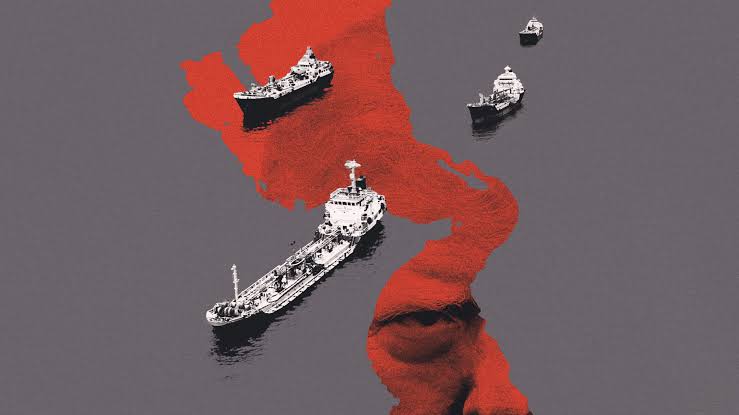
You don’t have to be a soldier to be directly impacted by war anymore. A housewife or a corporate employee, sitting thousands of miles away from either country, can become a victim.
Ask the mother in India who wishes to buy fresh produce at the local shop for her school-going children or the lady in Indonesia who works a regular 9-5 and has to rely on a broken public transport system to ferry her to and from the office. They are the ones feeling the pinch – the pressure of a decision they didn’t take.
This war brought economic uncertainty. And for a lot of unsuspecting adults, plunged them into a financial blackhole.
Inflation, rising fuel prices, higher grocery bills and stagnant wages – all real world challenges that plague a majority of the population and yet, there isn’t a solution to their financial woes.
To expect government or policy to right these wrongs is a fool’s dream. Instead, for those who wish to reclaim their power – their financial independence, here are some plausible alternatives.
If you have invested money in the markets, stay invested.
When your investments are losing money due to market reactions to geopolitical shocks, the best thing you can do – is hold your position. History has shown, time and time again, that those who have the ability to absorb the shocks, have emerged stronger. The phrase – what doesn’t kill you makes you stronger – comes to mind.
As an investor, time is your best friend. The longer you stay invested, the better your chances are to absorb the loss and walk out in a neutral or better position.
If you are holding cash, use the opportunity to buy.
Geopolitical shocks are buying opportunities. Markets almost always emerge stronger once investor confidence returns- which it invariably does.
Take the Gulf War (1990-1991) as an example, the S&P 500 fell 16.9% from its peak in July 1990 to its low in October 1990 after Iraq invaded Kuwait. After Operation Desert Storm (The U.S.-led coalition’s military campaign that began on 17 January 1991 to expel Iraqi forces from Kuwait after Iraq’s invasion in August 1990) the markets rallied. S&P gained ~29% over the following 12 months and recovered to new highs by early 1991.
There is also the underlying assumption that, in a volatile economy such as the one we find ourselves in, it is imperative to first address your basic needs and then invest.
Lower risk by diversifying your portfolio.
You’ve been told not to put all your eggs in one basket, haven’t you? This is one of those times when you pay heed to the advice you were given.
Diversification, nay, not holding all your eggs in one basket, helps minimise risk. Whether you’re heavily invested in one company, industry, sector, country, or commodity, casting a wider net ensures your portfolio is in a good position to absorb the risk and balance itself out in the longer term.
Don’t touch the nest egg, add to it.
In mature economies, holding cash is a bad investment decision. Cash loses value – this is an investing maxim that doesn’t get repeated enough or often – but there is merit in keeping cash at hand.
The most liquid asset – cash; can keep you afloat when economic uncertainty is at its peak.
Side note: A decision becomes a bad investment decision when you have money to invest and the choice to invest in multiple asset classes. If you don’t have money to invest, none of this matters. Build the nest egg first.
The Intentional Investor Take:
None of this is financial advice. But it’s what most advisors would tell you to do. When geopolitical shocks rattle your financial position, proceed with caution. As a newbie to investing or an amateur investor in your early 20s or 30s, time is your biggest asset. Leverage it to absorb geopolitical shocks and enhance your returns.